Project Funder: Funding for Social Change Ltd, United Kingdom
Implementing Organization: Daughters of Africa (DOAF)
Project Location: Faraba Kairaba Village, West Coast Region, The Gambia
Training Dates: 23rd – 24th May 2026
Report Date: 3rd June 2026
1. Introduction
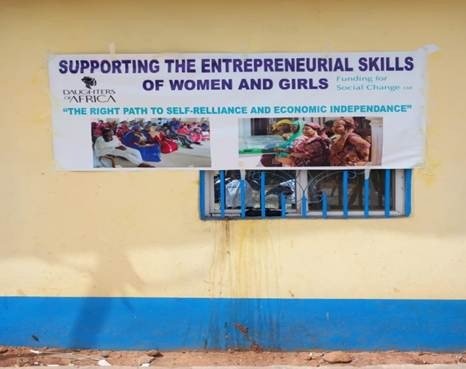
Daughters of Africa (DOAF) is pleased to submit this implementation report on the successful completion of a two-day intensive entrepreneurial skills training programme conducted for women and girls of the Kucha Kaffo Women’s Group in Faraba Kairaba Village. The training was made possible through the generous support of Funding for Social Change Ltd, United Kingdom, whose commitment to promoting social justice and gender equality continues to create transformative opportunities for marginalized communities.
The training forms part of a broader effort to address the persistent socio-economic disparities between men and women in The Gambia by equipping women and girls with practical entrepreneurial and income-generating skills that can enhance their economic independence and strengthen their participation in community development and decision-making processes.
2. Project Objectives
The primary objective of the training was to empower women and girls with practical vocational and entrepreneurial skills that can enable them to establish sustainable income-generating activities within their communities.
Specific objectives included:
- Enhancing participants’ knowledge and practical skills in the use of renewable energy technologies.
- Promoting environmentally sustainable livelihood opportunities through solar-powered food processing and cooking methods.
- Equipping participants with soap-making skills using locally available ingredients with medicinal and commercial value.
- Encouraging financial independence and self-reliance among women and girls.
- Strengthening the economic capacity of women to contribute meaningfully to household welfare and community development.
- Supporting efforts to reduce gender inequalities by increasing women’s participation in economic activities and leadership roles.
3. Training Participation
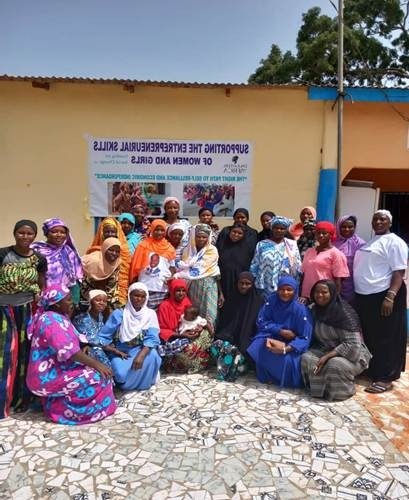
The training was conducted over two consecutive days, Saturday 23rd and Sunday 24th May 2026, and brought together a total of fifty-four (54) women and girls from the Kucha Kaffo Women’s Group of Faraba Kairaba Village.
Participants demonstrated remarkable enthusiasm and commitment throughout the training sessions, actively engaging in both theoretical discussions and practical demonstrations.
4. Training Activities
A. Renewable Energy Training
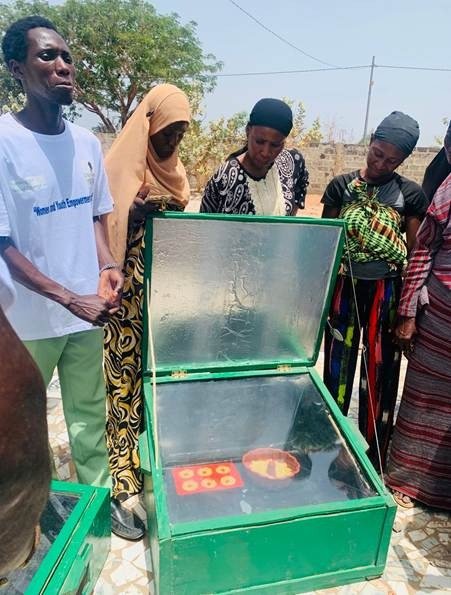
Participants received practical training on the operation and maintenance of solar-powered dryers and solar ovens. The sessions focused on:
- Introduction to renewable energy technologies.
- Benefits of solar energy for household and commercial use.
- Safe and effective operation of solar dryers.
- Food preservation techniques using solar drying technology.
- Baking and cooking using solar ovens.
- Business opportunities associated with renewable energy technologies.
The training highlighted how renewable energy can reduce dependence on costly traditional fuel sources while simultaneously creating income-generating opportunities.
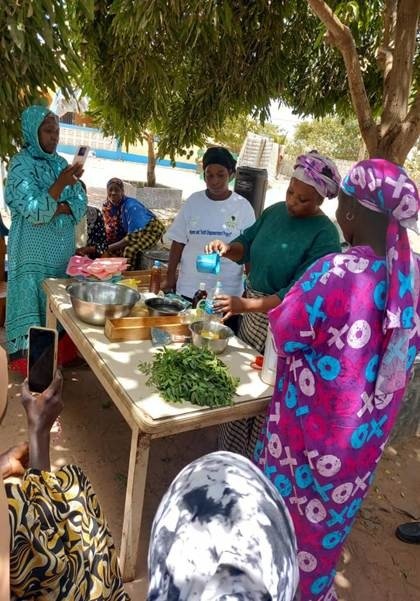
B. Soap Production Training
Participants were also trained in the production of high-quality soap using locally sourced ingredients with medicinal properties. Areas covered included:
- Selection and preparation of raw materials.
- Understanding measurements and mixing procedures.
- Safe handling of materials during production.
- Moulding, curing, and packaging techniques.
- Product quality control and marketing considerations.
- Business management and pricing strategies.
The practical sessions enabled participants to gain hands-on experience in producing marketable soap products suitable for local markets.
5. Key Outcomes and Achievements
The training achieved its intended objectives and produced several encouraging outcomes.
By the end of the two-day programme:
- Participants successfully demonstrated the ability to independently operate solar ovens and dryers.
- Women were able to bake cakes and prepare meals using solar ovens without external assistance.
- Participants produced quality soap products using the techniques taught during the training.
- Women gained increased confidence in their ability to engage in entrepreneurial activities and generate income.
- The group acquired practical knowledge that can be immediately translated into small-scale business ventures within their community.
The training also fostered teamwork, knowledge sharing, and collective problem-solving among participants, strengthening the cohesion of the women’s group.
6. Sustainability Measures
To ensure that the benefits of the training extend beyond the implementation period, Daughters of Africa provided the participants with a sustainability support package.
At the conclusion of the training, the following equipment and materials were officially handed over to the women’s group:
- Solar dryer
- Solar ovens
- Soap-making materials and supplies
The equipment will enable participants to continue practicing and refining the skills acquired during the training while producing goods for sale within their local markets.
The women’s group has expressed its commitment to utilizing the equipment collectively to establish sustainable income-generating activities and create long-term economic opportunities for its members.
7. Impact on Women’s Empowerment
The project directly contributes to advancing women’s economic empowerment and gender equality in Faraba Kairaba Village. By equipping women and girls with practical entrepreneurial skills and productive assets, the initiative helps reduce economic dependency and promotes greater financial autonomy.
Economic empowerment is a critical pathway toward enhancing women’s participation in household decision-making, community leadership, and broader development processes. The skills acquired through this training have the potential to improve household incomes, increase resilience against economic shocks, and create opportunities for women to become active contributors to local economic growth.
Furthermore, the use of renewable energy technologies aligns with sustainable development principles by promoting environmentally friendly production methods and reducing reliance on traditional energy sources.
8. Participant Feedback
Participants expressed profound appreciation to Funding for Social Change Ltd and Daughters of Africa for providing what they described as a life-changing opportunity. Many participants indicated that this was their first experience receiving practical entrepreneurial training linked directly to income generation.
The women emphasized their desire for additional capacity-building programmes and advanced training opportunities that would allow them to expand their businesses and further strengthen their economic position.
Their enthusiasm and commitment throughout the programme clearly demonstrated the demand for such interventions within rural communities.
9. Logistics and Welfare
To ensure the effective participation of all trainees, adequate food and refreshments were provided throughout the two-day training programme. This contributed significantly to maintaining participants’ energy levels and engagement during both theoretical and practical sessions.
The training was conducted in a conducive and participatory environment that encouraged active learning and collaboration among participants.
10. Conclusion
Daughters of Africa are grateful to Funding for Social Change Ltd for its generous support and confidence in our work. The successful implementation of this training programme demonstrates the transformative impact that targeted investments in women’s empowerment can have on communities.
The knowledge, skills, and equipment provided through this initiative have laid a strong foundation for sustainable income generation and economic empowerment among the women and girls of Faraba Kairaba Village. We remain committed to providing on-going technical support and monitoring to ensure that the participants continue to build upon the gains achieved through this intervention.
We look forward to strengthening our partnership with Funding for Social Change Ltd and expanding similar opportunities to other underserved communities across The Gambia.
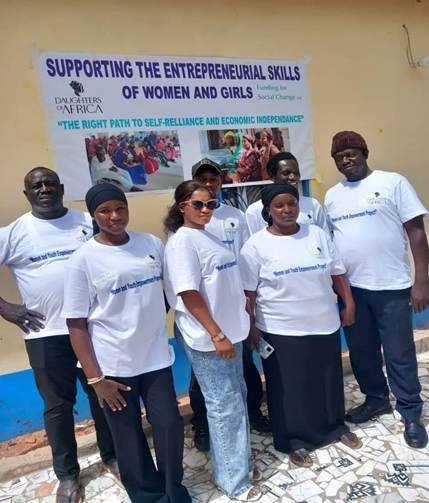
Daughters of Africa (DOAF) Team